For thousands of years, humanity has wrestled with a timeless question: What is the difference between intelligence and wisdom?
Across East and West, through philosophy and religion, countless traditions have offered their own answers. Yet when we look deeply enough, Buddhism, Christianity, and Taoism seem to converge on a shared insight:
Intelligence is a tool for understanding the world; wisdom is the ability to perceive truth.
Intelligence is the capacity to acquire knowledge, analyze information, and solve problems.
Wisdom is the capacity to see into the true nature of life, to move beyond the illusions of the ego, and to perceive reality as it is.
Join Buddha Student as we explore this fascinating meeting point through three timeless perspectives:
- Buddhism: seeing things as they truly are.
- Christianity: becoming like a little child again.
- Taoism: preserving the virtue and simplicity of the infant mind.
Wisdom and Intelligence in Buddhism: Seeing Things as They Truly Are
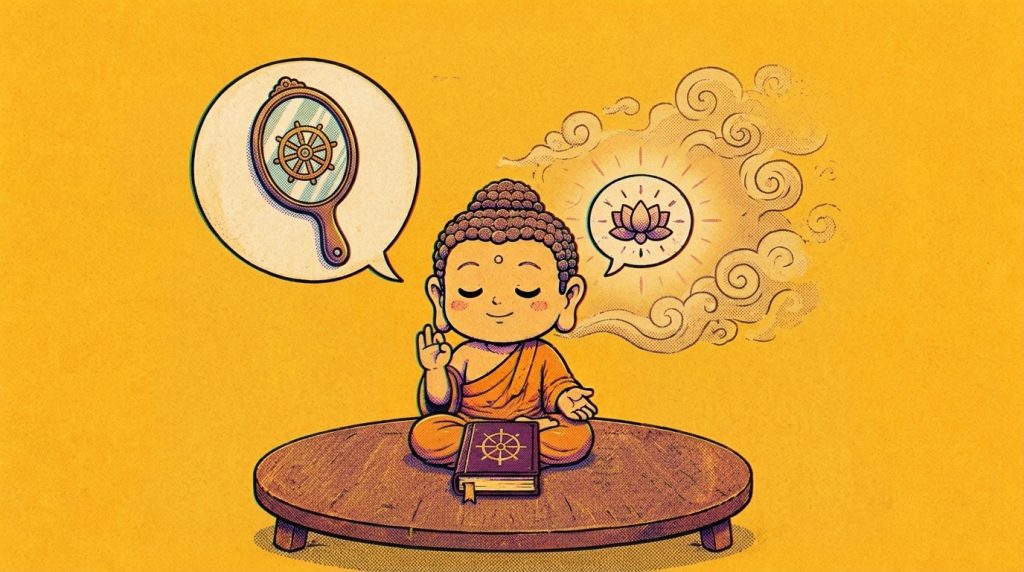
Buddhism does not deny the value of intelligence or analytical thinking. However, it points out something profound: no matter how sharp the intellect may be, it can still remain trapped within a deeply conditioned and distorted psychological system if a person has not clearly seen the nature of their own mind.
Intelligence and the Trap of Consciousness
In the Abhidhamma, the workings of the mind are analyzed in remarkable detail. Two mental functions closely related to what we commonly call “intelligence” are:
Viññāṇa (Consciousness)
The process of awareness through the six sense bases: eye, ear, nose, tongue, body, and mind.
This is the mind’s basic function of knowing an object. The eye sees a car, the ear hears a sound, or the mind becomes aware of a thought arising. One might compare consciousness to a computer’s data-input system, continuously receiving information from the world.
Saññā (Perception)
The ability to recognize, remember, label, and categorize experience based on accumulated memories and past conditioning.
When seeing an object, perception allows us to identify it as a car, a familiar face, or a sum of money. It functions much like a vast internal library, constantly comparing present experience with previously stored information. Most of our ordinary thinking, reasoning, learning, and decision-making depend heavily on this process.
The problem is that both viññāṇa and saññā can be influenced by āsava (mental taints or underlying corruptions)—the deep currents of greed, aversion, and delusion that flow beneath conscious awareness.
In everyday language, the mind is looking at the world through a pair of colored glasses without realizing it is wearing them.
This is why a person with an IQ of 150 is not necessarily seeing reality as it truly is. They may analyze with extraordinary speed, reason with impeccable logic, and possess an exceptional memory, yet all of those abilities may still be serving hidden desires, biases, fears, and attachments.
For example, when protecting personal interests, an intelligent person can often generate dozens of convincing arguments proving that they are right. When craving arises, thinking becomes a tool for justifying craving. When anger arises, thinking becomes a tool for rationalizing anger.
From a Buddhist perspective, the issue is not whether the brain is powerful or weak. The real question is: What is that intelligence serving?
A highly intelligent person who remains influenced by āsava will naturally use reasoning to reinforce a sense of self (atta), defend personal views, pursue desires, or seek superiority over others. The entire power of their intellect ultimately becomes a servant of the ego.
This is precisely why Buddhism draws a sharp distinction between intelligence and paññā (wisdom).
Intelligence is the ability to process information, remember, analyze, and reason.
Wisdom is the ability to see things according to their true nature.
Intelligence helps us acquire more knowledge.
Wisdom helps us understand the causes of suffering and the path that leads beyond suffering.
Intelligence sharpens thought.
Wisdom penetrates the veil of ignorance.
Intelligence can serve the ego.
Wisdom sees that what we call the self is merely a conditioned process arising through causes and conditions—not an independent, permanent, or unchanging entity.
Therefore, in Buddhism, the ultimate goal is not to become the smartest person in the room. It is to cultivate paññā—the wisdom that sees reality exactly as it is.
When wisdom arises, knowledge no longer serves greed, hatred, and delusion. Instead, it becomes a vehicle for liberation.
A well-known modern example is Bernie Madoff, the financial mastermind who once served as chairman of NASDAQ and operated the largest investment fraud in American history for nearly two decades. Many admired his extraordinary intelligence. Yet that intelligence was ultimately placed in the service of an insatiable ego and unchecked greed. From a Buddhist perspective, this illustrates viññāṇa and saññā operating under the influence of lobha (greed), rather than being guided by wisdom.
Wisdom: Seeing Reality as It Is
Paññā in Pali (equivalent to Prajñā in Sanskrit) is not accumulated knowledge. It is a way of seeing—or more precisely, the dissolution of the one who sees.
Dhammapada Verses 277, 278 and 279
All conditioned phenomena are impermanent;
when one sees this with Insight-wisdom,
one becomes weary of dukkha.
This is the Path to Purity.
All conditioned phenomena are dukkha;
when one sees this with Insight-wisdom,
one becomes weary of dukkha.
This is the Path to Purity.
All phenomena (dhammas) are without Self;
when one sees this with Insight-wisdom,
one becomes weary of dukkha.
This is the Path to Purity.
When paññā (wisdom) truly arises, a practitioner does not merely know that all things are impermanent—they directly see impermanence unfolding in each moment of experience.
A breath arises and immediately changes.
An emotion appears and is already beginning to fade.
A thought forms and quickly gives way to another thought.
This is why, in Buddhism, liberation does not come from accumulating more knowledge, but from direct seeing.
A person may read thousands of scriptures and memorize countless teachings on impermanence (anicca), suffering (dukkha), and non-self (anattā). Yet if they still suffer in the same way when facing loss, become angry when insulted, or cling to praise when admired, then that understanding remains largely conceptual.
When wisdom arises, however, the mind begins to perceive the laws of reality operating within everyday experience itself.
When praised, one sees pleasant feelings arising and passing away.
When criticized, one sees unpleasant feelings arising and passing away.
When success comes, one sees that joy does not last forever.
When failure comes, one sees that sorrow does not last forever.
Gradually, attachment weakens—not because one forces oneself to let go, but because one has seen clearly that there is ultimately nothing that can be held onto permanently.
This is the deeper meaning behind the Buddhist expression:
when one sees this with Insight-wisdom, …., This is the Path to Purity.
The word seeing in Buddhism does not mean reasoning, imagining, or believing.
It means direct realization.
It is like standing in the rain and knowing that it is raining. No proof is required. No debate is necessary. No external confirmation is needed.
When impermanence (anicca) is clearly seen, the mind clings less.
When suffering or unsatisfactoriness (dukkha) is clearly seen, the mind chases less after things that can never provide lasting fulfillment.
When non-self (anattā) is clearly seen, the mind identifies less with the body, emotions, thoughts, and the stories it tells about “me” and “mine.”
From this seeing arises a state known in the scriptures as nibbidā—often translated as disenchantment, disillusionment, or profound weariness in the Buddhist sense.
This is not pessimism, depression, or a loss of enthusiasm for life.
Rather, it is an awakening from a search that has gone on for far too long.
It is like someone who has spent years chasing their own shadow, believing that happiness lies just ahead. One day, they realize the shadow can never be grasped. The stopping that follows does not arise from disappointment, but from understanding.
From nibbidā comes virāga (dispassion or fading of craving).
From virāga comes letting go.
From letting go comes freedom.
The path is not about learning more and more, but about seeing more deeply.
It is not about possessing something new, but about understanding the true nature of what is already present.
And through that seeing, the mind gradually frees itself from the forces of greed, hatred, and delusion, entering the path of purification and liberation taught by the Buddha.
The Three Levels of Wisdom in the Pāli Canon (Theravāda)
In the Pāli Canon and the Theravāda commentarial tradition, paññā (wisdom) is classified into three distinct stages of development. These are known as the Threefold Wisdom (Tisso Paññā).
| Level | Pāli Term | Meaning | Nature / How It Develops | Practical Example |
|---|---|---|---|---|
| 1 | Suta-maya-paññā | Wisdom born of learning | Wisdom acquired from external sources through listening, reading, study, and the accumulation of knowledge. | Studying the Pāli Canon, listening to Dhamma talks, learning Abhidhamma, or researching Buddhist texts. |
| 2 | Cintā-maya-paññā | Wisdom born of reflection | Wisdom arising from contemplation, analysis, investigation, and careful examination of what has been learned. | Reflecting on teachings, applying logical inquiry, comparing scriptures, and personally examining principles such as karma, impermanence, and non-self. |
| 3 | Bhāvanā-maya-paññā | Wisdom born of cultivation | Wisdom arising through meditation and direct experiential insight. | Insight that develops through observing mind and body, directly seeing impermanence (anicca), unsatisfactoriness (dukkha), and non-self (anattā) within one’s own experience. |
These three forms of wisdom are not in opposition to one another; they support and strengthen each other.
Suta-maya-paññā provides the knowledge and orientation necessary for beginning the path.
Cintā-maya-paññā transforms borrowed knowledge into personal understanding through reflection and investigation.
Bhāvanā-maya-paññā is the stage of direct realization, where what has been learned and understood is personally verified through immediate experience.
According to Theravāda, only Bhāvanā-maya-paññā possesses the power to directly uproot defilements and lead to the Noble Path.
It is also important to note that Yoniso Manasikāra (wise attention or proper reflection) does not belong exclusively to reflective wisdom. Rather, it supports the entire process of practice. Through wise attention, one learns what is worth learning, reflects on what is worth reflecting upon, and observes what is worth observing.
Conceptual Knowledge and Direct Experience
According to the Abhidhamma tradition, the distinction between these forms of wisdom is not merely a difference in degree of understanding. It is also a difference in the level of reality toward which they are directed.
Suta-maya-paññā and Cintā-maya-paññā operate primarily within the realm of paññatti—conceptual or conventional reality.
When someone reads in the scriptures that “the aggregate of form is impermanent,” the mind is working with words, definitions, symbols, and concepts. One concept—impermanence—is being used to explain another concept—the body. The entire process unfolds within the domain of thought, analysis, comparison, and reasoning.
This does not mean that learning and reflection are unimportant.
On the contrary, they are indispensable foundations of the path. Through study and contemplation, practitioners learn what to observe, what to avoid, and what qualities to cultivate.
Yet no matter how sophisticated this understanding becomes, it remains a process of thinking about reality rather than directly experiencing reality itself.
Consider a person who has read hundreds of books about honey. They know its origin, chemical composition, nutritional value, and can even deliver eloquent lectures about its taste.
Yet all of that knowledge remains fundamentally different from actually tasting a drop of honey on the tongue.
The difference between Suta-maya-paññā, Cintā-maya-paññā, and Bhāvanā-maya-paññā is very much the same.
Contacting Ultimate Reality
Bhāvanā-maya-paññā, by contrast, begins to touch Paramattha (ultimate reality)—the phenomena that are directly experienced before they are interpreted and transformed into concepts.
When a practitioner develops mindfulness through proper insight meditation, attention gradually shifts away from names, labels, and theories.
What is experienced is not the word “breath” but the actual movement of breathing.
Not the concept of “pain,” but the direct sensations of heat, cold, tension, hardness, vibration, pressure, or contraction appearing within the body.
At this stage, experience is no longer filtered primarily through the screen of language.
What is observed are phenomena arising and passing away in the present moment.
Only afterward does the mind assign names and construct explanations.
In other words, Bhāvanā-maya-paññā is the capacity to encounter living experience before conceptualization takes over.
This is one of the most important shifts on the Buddhist path.
A person may spend years thinking about reality, but liberation truly begins only when the mind learns how to look directly at reality itself.
It is the movement from:
- Thinking about impermanence to seeing impermanence.
- Understanding non-self intellectually to directly experiencing non-self.
- Knowing the teachings to living the teachings.
The distance between these two states may seem small, yet it is precisely the distance between knowledge and insight.
As long as one remains only in study and reasoning, the mind continues to operate within the world of memory, language, and concepts.
Only by returning to direct observation of body and mind in the present moment does one begin to encounter reality as it actually is and cultivate what the scriptures call Yathābhūta-ñāṇadassana—knowledge and vision of things as they truly are.
In short:
Suta-maya-paññā shows where the path is.
Cintā-maya-paññā explains why that path should be followed.
Bhāvanā-maya-paññā is the actual step placed upon the road.
And only by walking the path can one arrive at the destination.
Hearing, Reflection, and Meditation in Mahāyāna Buddhism
| Stage | Meaning |
|---|---|
| Śruta | Learning the Dharma through hearing and study |
| Cintā | Reflecting upon and contemplating the Dharma |
| Bhāvanā | Practicing and directly cultivating the Dharma |
Śruta refers to receiving the Dharma through scriptures, qualified teachers, spiritual friends (kalyāṇa-mitra), and various forms of study.
Cintā is the process of reflecting upon, examining, and contemplating what has been learned, transforming borrowed knowledge into personal understanding.
Bhāvanā is the actual cultivation of the Dharma through ethical discipline, meditation, wisdom, and the various paths of Buddhist practice.
In many Mahāyāna traditions, Śruta–Cintā–Bhāvanā are not viewed merely as three sequential stages. Rather, they are three mutually supportive processes that continue throughout a practitioner’s entire spiritual life.
One continues learning while practicing.
One continues reflecting while cultivating.
Even highly realized practitioners continue to study and contemplate the Dharma for the benefit of themselves and others.
Although Śruta–Cintā–Bhāvanā bears a strong resemblance to the Theravāda classification of Suta-maya-paññā, Cintā-maya-paññā, and Bhāvanā-maya-paññā, the two frameworks emerged within different historical and textual traditions.
From an academic perspective, it is therefore more accurate to regard them as parallel frameworks rather than identical doctrinal categories.
| Mahāyāna | Theravāda |
|---|---|
| Śruta (Learning through hearing and study) | Suta-maya-paññā (Wisdom born of learning) |
| Cintā (Reflection and contemplation) | Cintā-maya-paññā (Wisdom born of reflection) |
| Bhāvanā (Meditative cultivation) | Bhāvanā-maya-paññā (Wisdom born of cultivation) |
However, the correspondence is not exact.
In Mahāyāna literature, Śruta–Cintā–Bhāvanā primarily describes the practitioner’s path of learning, contemplation, and cultivation.
In Theravāda Abhidhamma, Suta-maya-paññā, Cintā-maya-paññā, and Bhāvanā-maya-paññā classify wisdom according to the manner in which it arises.
Despite these differences, both traditions point toward the same essential principle:
Study provides direction.
Reflection deepens understanding.
Meditative cultivation transforms understanding into direct realization.
Only when the Dharma is personally realized does knowledge mature into wisdom.
Wisdom and Intelligence in Christianity: The Call to Become Like a Child
The Paradox of Childlikeness
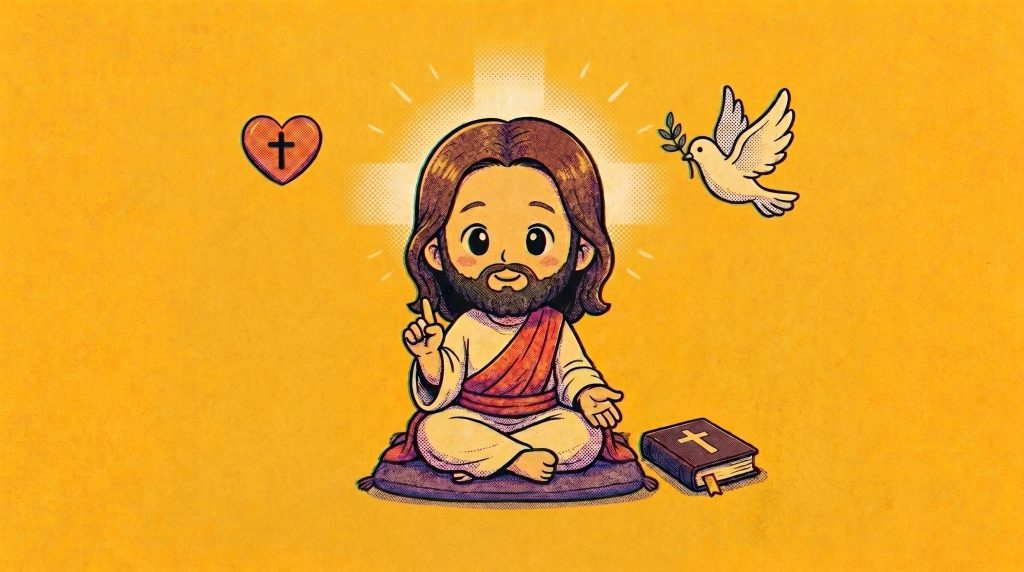
One of the profound paradoxes of Christianity is that true spiritual maturity leads a person back to the qualities of a child.
This may sound contradictory.
Human maturity is commonly measured by learning, achievements, social standing, and life experience.
In the Gospel of Matthew 18:3, Jesus said:
Truly I tell you, unless you change and become like little children, you will never enter the kingdom of heaven.
He was not praising ignorance or childishness.
What He commended was humility.
A child recognizes the need to be taught.
A child is not yet consumed by the need to prove that they are right.
A child retains a sense of wonder before ordinary things.
Adults, however, are often trapped by the assumption that they already know.
And that assumption can become one of the greatest barriers to truth.
That is why Saint Paul wrote that God has made the wisdom of this world foolish.
Not because God opposes knowledge,
but because knowledge can so easily become pride.
The more intelligent we are, the more tempted we become to believe that reality has nothing left to teach us.
Scientia and Sapientia: Augustine’s Two Kinds of Knowing
Before becoming Saint Augustine, Augustine of Hippo was one of the most brilliant minds of the fourth-century Mediterranean world. He was a master of rhetoric, philosophy, and logical reasoning. Had he lived today, he would likely have been a celebrated scholar at one of the world’s leading universities.
What makes Augustine remarkable, however, is that he later became one of the sharpest critics of the limits of intellectual achievement alone.
In his Confessions, Augustine looks back on his youth and admits that he once tried to answer life’s deepest questions entirely through reason.
He writes:
“Quaesivi, unde malum, et non erat exitus.”
“I sought the origin of evil, and there was no way out.”
This brief statement captures an experience that remains deeply familiar to modern people.
Many believe that if they read enough books, acquire enough knowledge, or think deeply enough, every important question in life will eventually be solved. Yet Augustine discovered that some questions cannot be resolved by analysis alone, no matter how far reason is pushed.
Why do human beings suffer?
Why does death exist?
What makes a life meaningful?
Why do some people possess almost everything they desire and yet remain profoundly empty?
These are not questions that can be answered simply by gathering more information.
According to Augustine, the turning point came when he abandoned the need to place human intellect in control of everything. He did not reject reason itself. Rather, he rejected the prideful assumption that reason could serve as the supreme judge of all reality.
Out of this realization emerged one of Augustine’s most important distinctions, developed in De Trinitate.
He called the first kind of knowing Scientia.
Scientia is knowledge of the visible world: history, science, facts, logic, and the network of cause and effect. It is the kind of knowledge that enables civilizations to flourish, technologies to advance, and the universe to be explored.
Yet Augustine believed that Scientia has clear limits. It is exceptionally good at answering the question, “How does this work?” but often powerless before the question, “What is it for?”
A person may know how to build a nuclear weapon without knowing whether it ought to be used.
A person may know how to earn billions of dollars without understanding why they remain restless.
A person may understand the structure of the human brain and still fail to grasp the meaning of love.
This is where the second kind of knowing enters.
Augustine called it Sapientia.
Sapientia is often translated as “wisdom,” but it means something deeper than practical insight. It is the contemplation of eternal realities: truth, goodness, beauty, and ultimately God Himself.
If Scientia explains how the world functions, Sapientia illuminates the meaning of existence.
If Scientia helps us know more, Sapientia helps us see more deeply.
Augustine expressed this distinction in one of the most famous lines in Christian history:
“Fecisti nos ad te, et inquietum est cor nostrum, donec requiescat in te.”
“You have made us for Yourself, and our hearts are restless until they rest in You.”
Augustine was not speaking of physical rest.
He was speaking of the rest of the soul.
Human beings are always pursuing something.
More wealth.
More recognition.
More achievement.
More experiences.
Yet when we finally obtain what we desire, satisfaction often lasts only briefly before a new desire emerges.
For Augustine, this reveals that the human heart is attempting to satisfy an infinite longing through finite things.
And this is precisely why Scientia, valuable as it is, cannot provide ultimate peace.
Scientia can tell us how things work.
Sapientia helps us understand what is truly worth living for.
Wisdom Cannot Be Separated from Love
If Augustine laid the foundation for the distinction between knowledge and wisdom, then Thomas Aquinas developed it into one of the most complete intellectual frameworks in Christian thought.
(Thomas Aquinas (1225–1274) was an Italian Dominican friar, philosopher, and theologian.)
In the Summa Theologiae, Aquinas places Sapientia at the highest level among the intellectual virtues.
He defines it as:
“Sapientia est cognitio rerum per causas altissimas.”
“Wisdom is the knowledge of things through their highest causes.”
At first glance, this definition may sound highly philosophical.
Its meaning, however, is surprisingly practical.
An intelligent person often sees individual events.
A wise person perceives the deeper causes that connect those events.
An intelligent person may know how to win an argument.
A wise person asks whether winning the argument actually serves the good.
An intelligent person knows how to accumulate wealth.
A wise person asks what wealth ought to serve.
An intelligent person knows how to influence others.
A wise person is concerned with how to love others.
What makes Aquinas’s understanding of wisdom unique is that Sapientia is not merely an intellectual ability.
It is inseparably connected to Caritas—self-giving love, or charity in its highest Christian sense.
According to Aquinas, if a person becomes more knowledgeable while simultaneously becoming more selfish, more arrogant, or more dismissive of others, that knowledge has not yet become Sapientia.
The reason is simple.
Love expands vision.
Self-centeredness narrows it.
A person concerned only with themselves tends to see reality only through the lens of personal advantage.
A person capable of genuine love is able to perceive a reality larger than the self.
For this reason, Aquinas regarded true wisdom as a gift.
It comes not only through study, but also through inner transformation.
Knowledge can fill the mind.
Wisdom transforms the person.
The intelligent person seeks answers.
The wise person seeks meaning.
The intelligent person asks, “How can this be done?”
The wise person asks, “What is this ultimately for?”
This is why Aquinas considered Sapientia to be more than accumulated knowledge.
It is the capacity to see life in the light of its highest purpose.
Scientia helps us understand how to succeed in life.
Sapientia helps us understand what success is ultimately for.
Wisdom and Intelligence in Taoism: Virtue Like That of a Child

The kind of wisdom that Laozi describes appears in Chapter 55—one of the most beautiful and mysterious passages in the entire Dao De Jing:
含德之厚,比於赤子。
蜂蠆虺蛇不螫,猛獸不據,攫鳥不搏。
骨弱筋柔而握固。
未知牝牡之合而朘作,精之至也。
終日號而不嗄,和之至也。
“One who possesses abundant Virtue is like a newborn child.
Poisonous insects will not sting it.
Fierce beasts will not seize it.
Birds of prey will not attack it.
Its bones are weak and its sinews soft, yet its grip is firm.
It does not yet know the union of male and female, yet its vital essence is complete.
It may cry all day without becoming hoarse, for its harmony is perfect.
At the heart of this passage lies a single line:
“One who possesses deep Virtue is like a newborn child.”
At first glance, this seems to contradict common sense.
We usually assume that wisdom comes from age, experience, and accumulated knowledge. The more a person studies and the more they experience in life, the wiser they are believed to become.
Why, then, would Laozi choose a newborn child as the symbol of the highest state of Virtue after a lifetime of contemplating the Dao and the nature of reality?
The answer lies in what he means by De (德).
In modern usage, virtue is often understood as moral goodness—qualities such as honesty, humility, or kindness that people consciously try to cultivate.
For Laozi, however, De means something deeper.
It is the natural expression of the Dao within a human being.
When a person lives in harmony with the Dao, their actions become spontaneous rather than forced, effortless rather than calculated, free from the constant need to assert themselves.
This is what Laozi calls Virtue.
Therefore, one who possesses abundant De is not someone trying to appear more virtuous than others.
Rather, they have stopped forcing themselves and stopped forcing life.
Their actions arise naturally, at the right moment and in the right measure, without the endless interference of the ego.
This is why Laozi turns to the image of the newborn child.
The child is not a symbol of ignorance or immaturity.
It represents a state of consciousness that has not yet been divided by countless concepts and mental constructions.
A newborn has no reputation to defend.
No status to maintain.
No image to project.
No need to prove that it is right.
No desire to win arguments.
No urge to be superior to anyone else.
In other words, what adults call the ego has not yet fully formed.
Ironically, much of adult suffering arises precisely from these psychological structures.
We worry constantly about what others think of us.
We are hurt by criticism.
We are pleased by praise.
We become angry when disrespected.
We feel insecure when compared with others.
Much of our inner life revolves around a center we call “I.”
Laozi observed that the farther we move from the Dao, the more complicated this sense of self becomes.
A person may become highly intelligent in the ordinary sense, yet use that intelligence to construct increasingly sophisticated defenses for the ego.
Knowledge becomes justification.
Reason becomes self-protection.
Understanding becomes a means of proving superiority.
Yet all of this remains activity of the ego.
The newborn operates differently.
It is completely present in the moment.
When hungry, it cries.
When satisfied, it sleeps.
When joyful, it laughs.
When tired, it rests.
There is no gap between experience and response.
No continuous inner commentary evaluating everything that happens.
For Laozi, this is not a deficiency.
It is a form of original wholeness that adulthood has lost.
Therefore, the path of the Dao is not a return to childishness.
That would be impossible.
The path of the Dao is to pass through the entirety of life—to pass through knowledge, culture, success, failure, achievement, and disappointment—and then return to simplicity without returning to ignorance.
A newborn is simple because it knows nothing.
A wise person is simple because they have seen through so much.
Outwardly the two may appear similar.
Inwardly they are completely different.
The child stands at the beginning of the journey.
The sage stands at the end.
And at that final point, the sage rediscovers the innocence that was once lost.
This is one of the deepest paradoxes of Taoism:
The highest wisdom is not becoming more complicated.
It is becoming more simple.
Not accumulating endless layers of identity and knowledge, but letting go of what is unnecessary and returning to one’s natural state.
Thus, when Laozi says,
“One who possesses deep Virtue is like a newborn child,”
he is not praising childishness.
He is describing a spiritual condition in which a person has moved beyond the domination of the ego, lives in harmony with the Dao, and becomes pure once again—not with the innocence of ignorance, but with the clarity that comes after a lifetime of understanding.
This is precisely the idea expressed in Chapter 48:
為學日益,為道日損。
損之又損,以至於無為。
“In the pursuit of learning, something is gained every day.
In the pursuit of the Dao, something is dropped every day.
Less and less is done until one reaches non-forcing.”
Intelligence adds.
It accumulates concepts, skills, information, and identities.
Wisdom subtracts.
It releases attachments, assumptions, and egoic constructions until nothing unnecessary remains.
The journey ends where it began:
like a child,
yet this time carrying the freedom that comes from conscious understanding.
Wisdom: The Point Where Three Philosophical Traditions Meet

| Buddhism | Christianity | Taoism | |
|---|---|---|---|
| Intelligence | Cintā-maya-paññā (conceptual understanding of conventional reality) | Scientia (rational knowledge) | Calculating mind and forceful striving |
| Its Limitation | Serves the illusion of self (attā) | Can become intellectual pride | What becomes rigid eventually breaks |
| Wisdom | Bhāvanā-maya-paññā (wisdom born of direct realization) | Sapientia | Deep Virtue (De) — like that of a newborn child |
| Path of Transformation | Meditation and the dissolution of ego-clinging | Humility and love (Caritas) | Wei Dao ri sun (為道日損) — letting go day after day |
| State Realized | Nibbāna | Union with God | Perfect harmony with the Dao |
One of the most remarkable points of convergence among these three traditions is the paradox of not-knowing.
Buddhism
Awakening is the realization that there is ultimately nothing to attain.
Christianity
God cannot be fully comprehended through concepts alone.
Taoism
道可道,非常道。
The Dao that can be spoken is not the eternal Dao.
All three traditions suggest that ultimate reality transcends language and conceptual thought.
And intelligence—however brilliant—remains a tool of concepts.
Intelligence may bring us to the threshold, but it cannot cross it for us.
If wisdom is not about knowing more, possessing more, or becoming a grander version of ourselves, then what is wisdom?
Buddhism calls it Nibbāna—not a place to reach, but the ending of ignorance, craving, and the restless search for fulfillment. When clinging ceases, reality reveals itself as it truly is.
Christianity speaks of the Kingdom of God, which, as Jesus says, is “among you” (Luke 17:21). It is not merely a future destination, but a transformed way of seeing and participating in reality through God.
Taoism calls it the Dao—not a destination, but the Way itself.
Three different answers.
Yet all point in the same direction:
Wisdom is not a matter of adding more.
It is a matter of seeing clearly.
Not acquiring something new,
but ceasing to misunderstand what has always been present.